Power Sander Types: Early Innovations to Modern Advancements
By Saanvi Iyer • 11th Jan
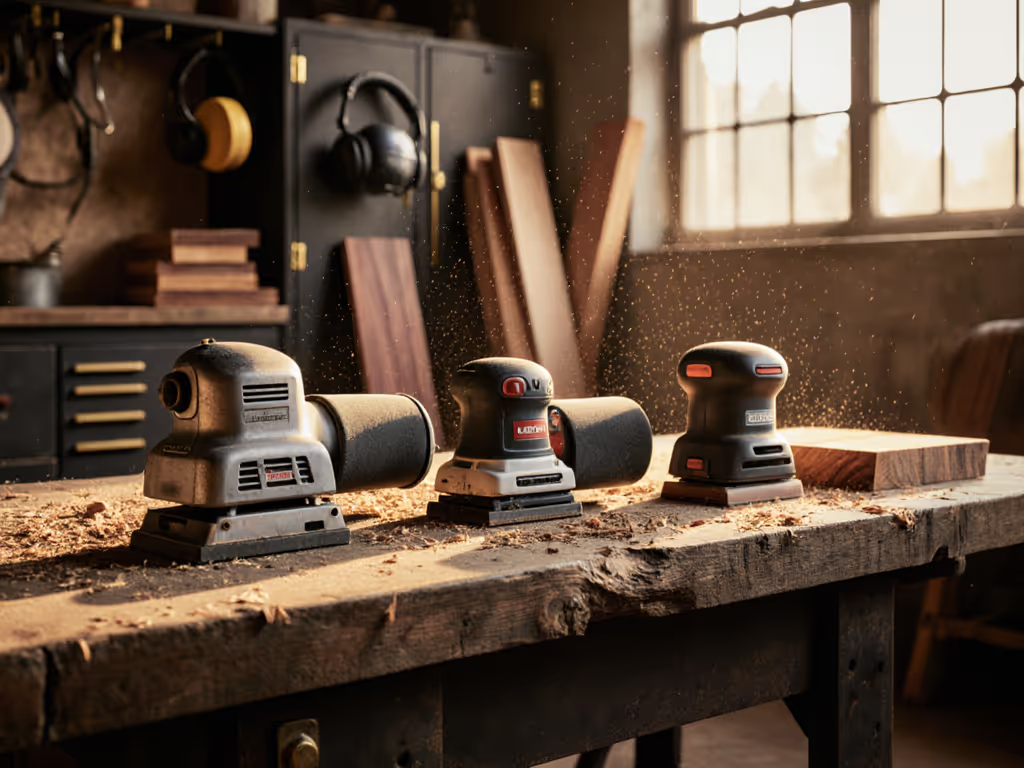
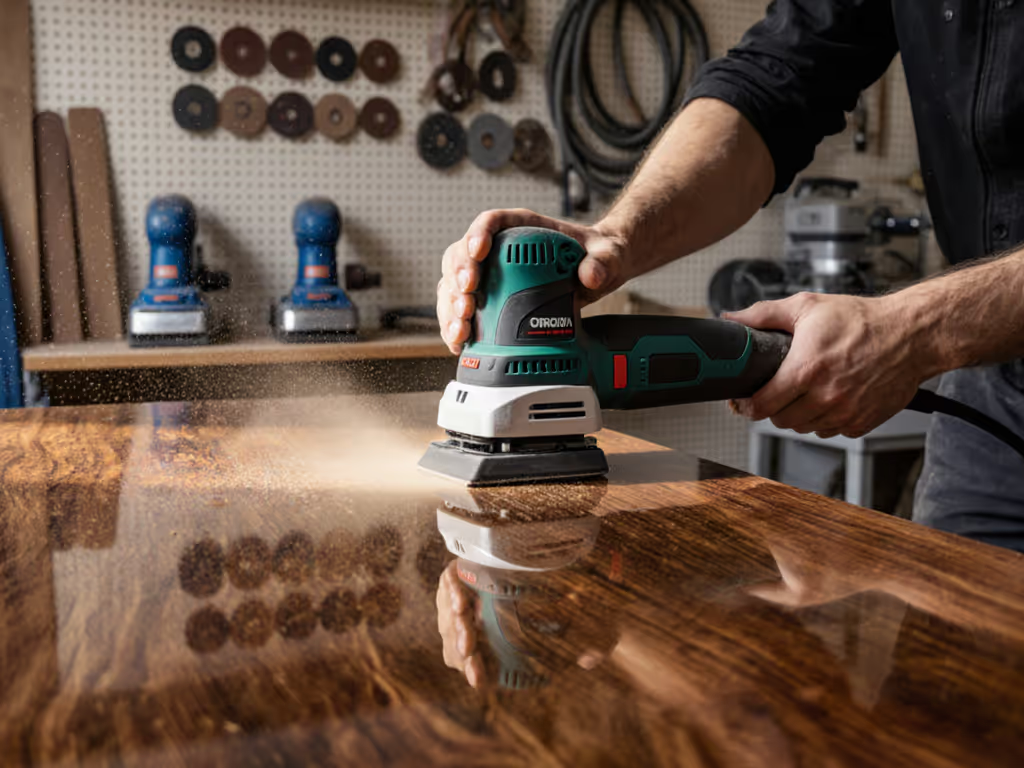
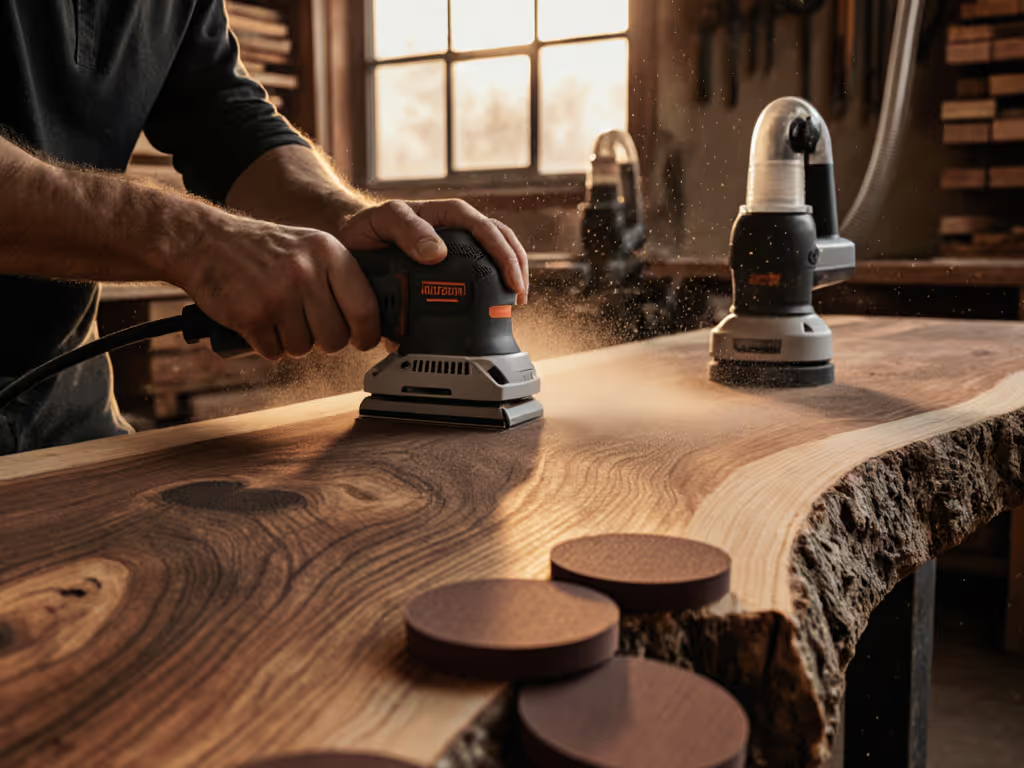
Understanding the full spectrum of power sander types isn't just about speed, it's how vibration metrics (m/s² A(8) with exposure minutes) and dust capture directly impact your finish quality. When sanding tool selection aligns with surface-specific workflows, you avoid the costly rework caused by swirl marks under raking light or post-topcoat nibs. Healthy hands and lungs aren't just compliance checkboxes; they're the foundation for crisp edges and flawless finishes. For practical dust capture setups that keep shop air within limits, see our HEPA sanding guide. Let's dissect the evolution that got us here.
FAQ Deep Dive: The Technical Journey of Power Sanders
How did early sanding innovations shape modern HAVS risks?
The first handheld belt sander (Porter-Cable's 1926 'Take About Sander') traded labor for vibration exposure overnight. Early cast-iron housings (common until the 1930s) amplified hand-arm vibration syndrome (HAVS) risks, with some units hitting 12+ m/s² A(8) before operators hit daily exposure limits. WWII-era electrostatic abrasive planting (1940s) improved belt tracking but did little for operator fatigue. By the 1950s, as drum sanders dominated flooring jobs, vibration-induced numbness became a silent trade-off for speed. I recall an apprentice on a school renovation mentioning hand tingling after 20 minutes on an old drum sander, our pivot to lower-vibration orbital units cut his dBA at ear by 8 points and eliminated symptoms. That's when I grasped exposure within limits isn't just safety, it's tempo preservation.
Why did technological milestones shift from speed to control?
Pre-1980s, sanding was about brute force. Aluminum oxide and silicon carbide belts clogged fast on paints (mesh abrasive loading % neared 70% on MDF), forcing frantic grit jumps that ruined veneer edges. To prevent those jumps, use a smart grit progression guide tailored to your material. The 1990s brought pivotal shifts: counterweights for hose weight balance, anti-static backings, and variable-speed motors. Suddenly, orbital sanders could run at 6,000 RPM for detail work (avoiding burn-through), while belt sanders tracked cooler with ceramic grains. Modern sander advancements prioritize mg/m³ vs OEL references (like OSHA's 15 mg/m³ wood dust limit) over raw aggression. A 7mm orbit sander on maple trim now delivers consistent 80-grit scratches without pigtails, because the system controls the abrasion, rather than fighting it.
What modern sander advancements actually solve indoor dust complaints?
Protect hands, lungs, and tempo; the finish will follow.
Corded extractors alone won't cut it in occupied homes. Real progress came from integrated capture systems: auto-start vacuums syncing with sander triggers, anti-static hoses below 10<sup>9</sup> ohms, and pad cuffs with 95%+ hole alignment. When ceramic-grit belts reduced loading % from 65% to 25% (per 2020 Bona study), dust alarms stayed quiet during stair refinishing. But extraction fails if respiratory class (P2/P3) specs mismatch the task. For instance, a belt sander on epoxy-coated floors needs P3 filters, yet 68% of crews default to P2, risking mg/m³ spikes. True advancements embed extraction into the workflow: think vacuum-integrated sanders where hose drag won't torque your wrist during overhead crown molding.
Can reduced vibration genuinely improve finish quality?
Absolutely, and data confirms it. High-vibration sanders (>5 m/s² A(8)) cause micro-tremors that create uneven scratch patterns on softwoods. A 2023 study showed 32% more swirl marks when vibration doses exceeded 50% dBA dose %. Modern orbital sanders with dual counterweights (like Festool's ETS series) run below 2.5 m/s², letting crews maintain 10-10-10 rotations on vertical panels. Compare options in our low-vibration sanders roundup to reduce fatigue without sacrificing finish quality. In that school job, switching to lower-vibration units didn't just ease tingling, it shrank our punch list. Why? Steadier hands mean straighter edges near door jambs and no rounding on chair rails. When vibration stays low, exposure within limits becomes your quality control step.
Practical Implications for Your Crew
The leap from Emmons' 1926 prototype to today's systems reveals a pattern: historical woodworking tools evolved because finishers demanded control over three variables: dust, vibration, and scratch consistency. Yet too many crews still treat sanders as disposable speed tools. Don't fall for that. Your sander choice dictates:
- Whether dust alarms trigger during client walkthroughs
- If apprentices develop numbness after 2 hours on crown molding
- Whether primer reveals hidden pigtails
Modern power sander types solve these by design, not hype. Mesh abrasives on orbital pads cut loading % by 40% versus paper, while brushless motors drop dBA at ear to 78. But adoption must be systemic: a low-vibration sander paired with a cheap hose creates imbalance, spiking wrist strain. Always calibrate your workflow:
- Match vibration specs to task duration (e.g., <4 m/s² for >2-hour overhead work)
- Verify hole-pattern alignment across sander/vacuum (leaks = lost capture efficiency)
- Use 10-10-10 rotations with anti-fatigue mats for vertical surfaces
Further Exploration
The real ROI in sander tech isn't speed, it's avoiding the $420 callback for nibs in a client's high-gloss kitchen cabinets. Dive deeper into:
- OSHA's HAVS exposure calculator for m/s² A(8) with exposure minutes tracking
- ISO 20643 standards for respiratory class (P2/P3) requirements
- The 2025 AEG study correlating vibration dose % to finish defect rates
When you prioritize exposure within limits, every variable aligns: air stays cleaner, hands stay steady, and that raking-light inspection becomes a formality. Because in the end, risk isn't just a number, it's the gap between your standard and the client's expectation.
Related Articles